
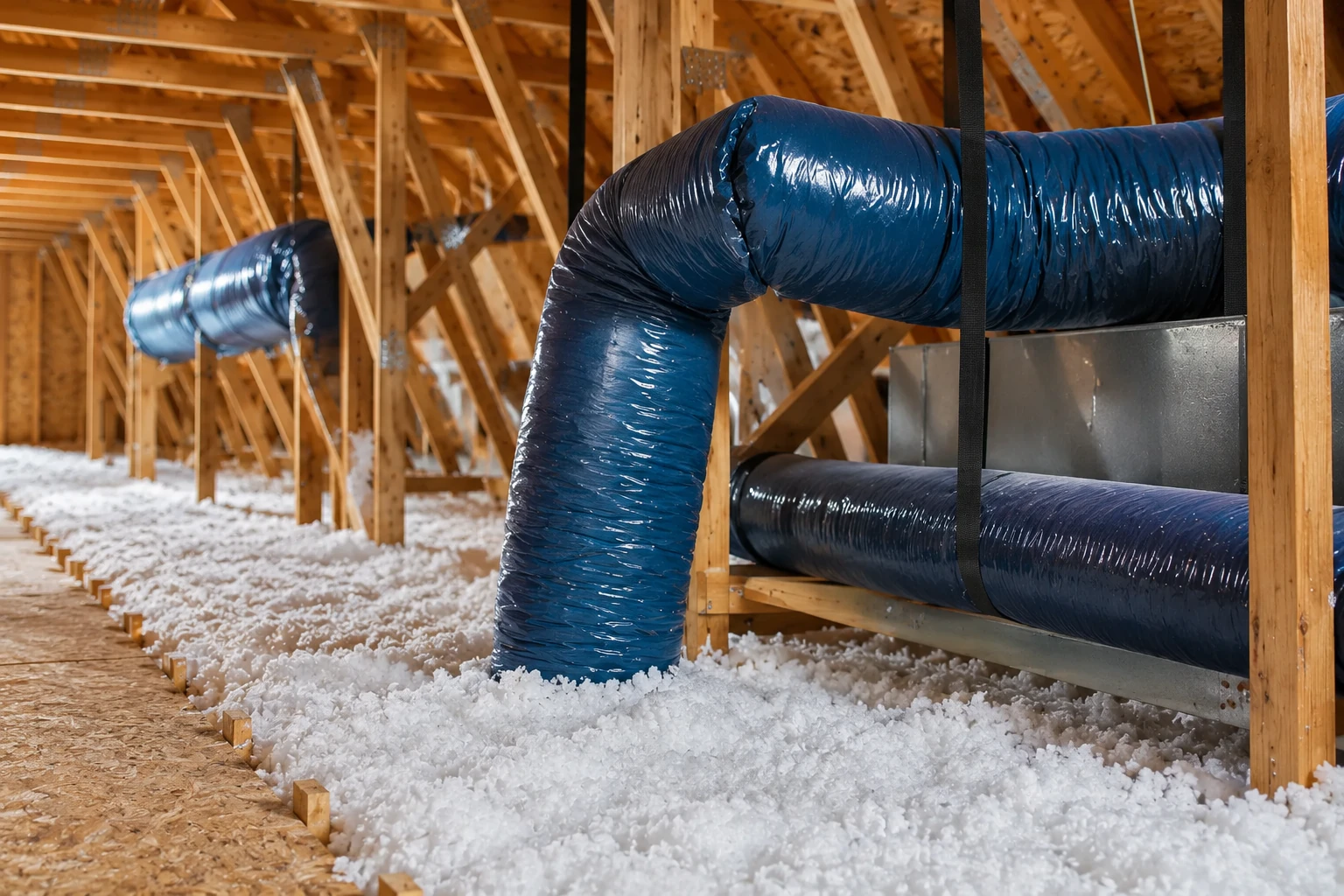
French Valley isn't a city. It's unincorporated Riverside County, so there's no city hall here, and the county handles the rules that touch your house. A lot of what we walk into is tract neighborhoods of two-story houses, many with the air handler and ducts up in the attic. The calls are the usual ones: a hot upstairs, a bedroom over the garage that never cools down, and a power bill that climbs every summer.
As an insulation contractor based in Menifee, CA, we do the same work in Mead Valley and Murrieta. Out here the county gets hot, dry Santa Ana winds every year, and they push heat through every gap in an attic, so on these houses sealing the leaks matters as much as how deep the insulation goes.
What moves the price and the schedule
The price turns on how big the attic is, how many inches are already up there, whether the old material can stay and how many gaps need sealing first. It also depends on whether you go with foam or blown-in, which is loose fill blown through a hose, and a tight attic with a low roof takes longer to work in. The schedule turns on the same things, plus any roof leak or wiring problem that has to be fixed before we cover it, because burying it under new insulation just costs you twice. Your own figure comes from the estimate, after I've been up in your attic and seen it.
Sealing the attic before we insulate it
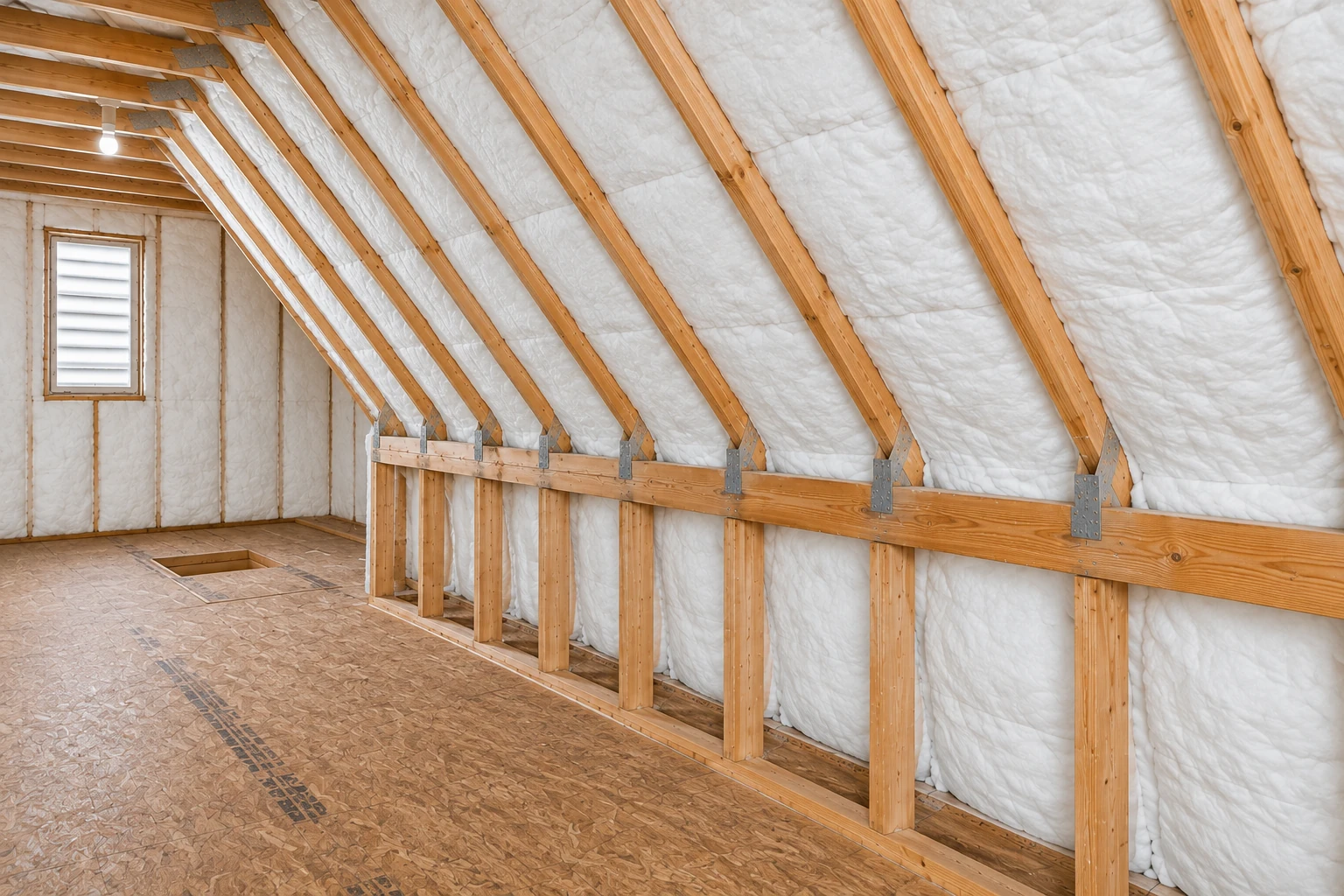
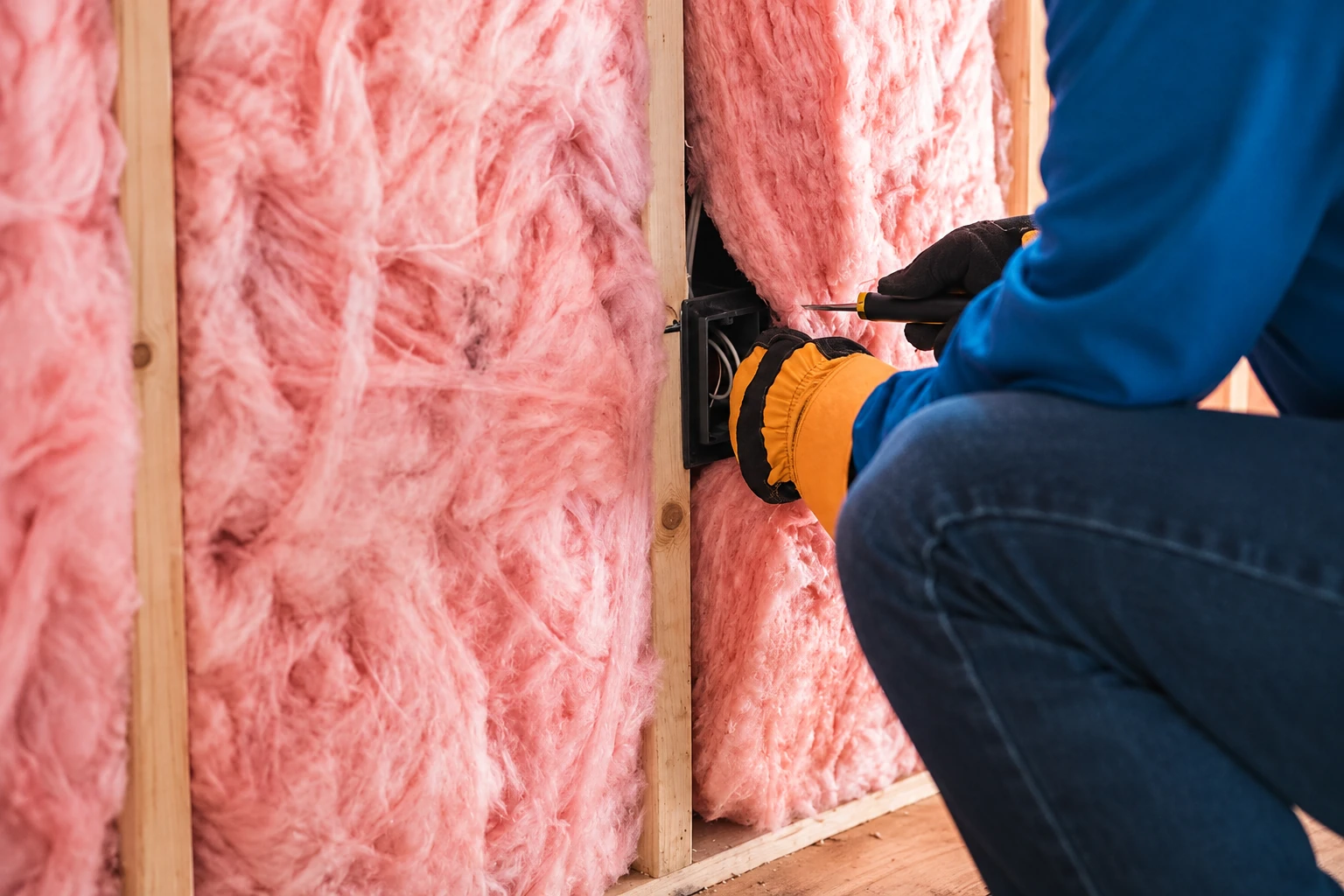
A lot of the attics we open have gaps around the can lights, pipes, ducts and hatch, so hot air moves through them however deep the insulation is. We start with air sealing, closing those gaps with foam and caulk. Then we lay the insulation evenly out to the edges, where it's usually thinnest, and keep the eave vents clear so the attic can still breathe. Foam costs more but seals and insulates in one pass, so it can be worth it when your ducts run through the attic. Otherwise, sealing the gaps and topping up loose fill usually wins.
The room over the garage and cold floors
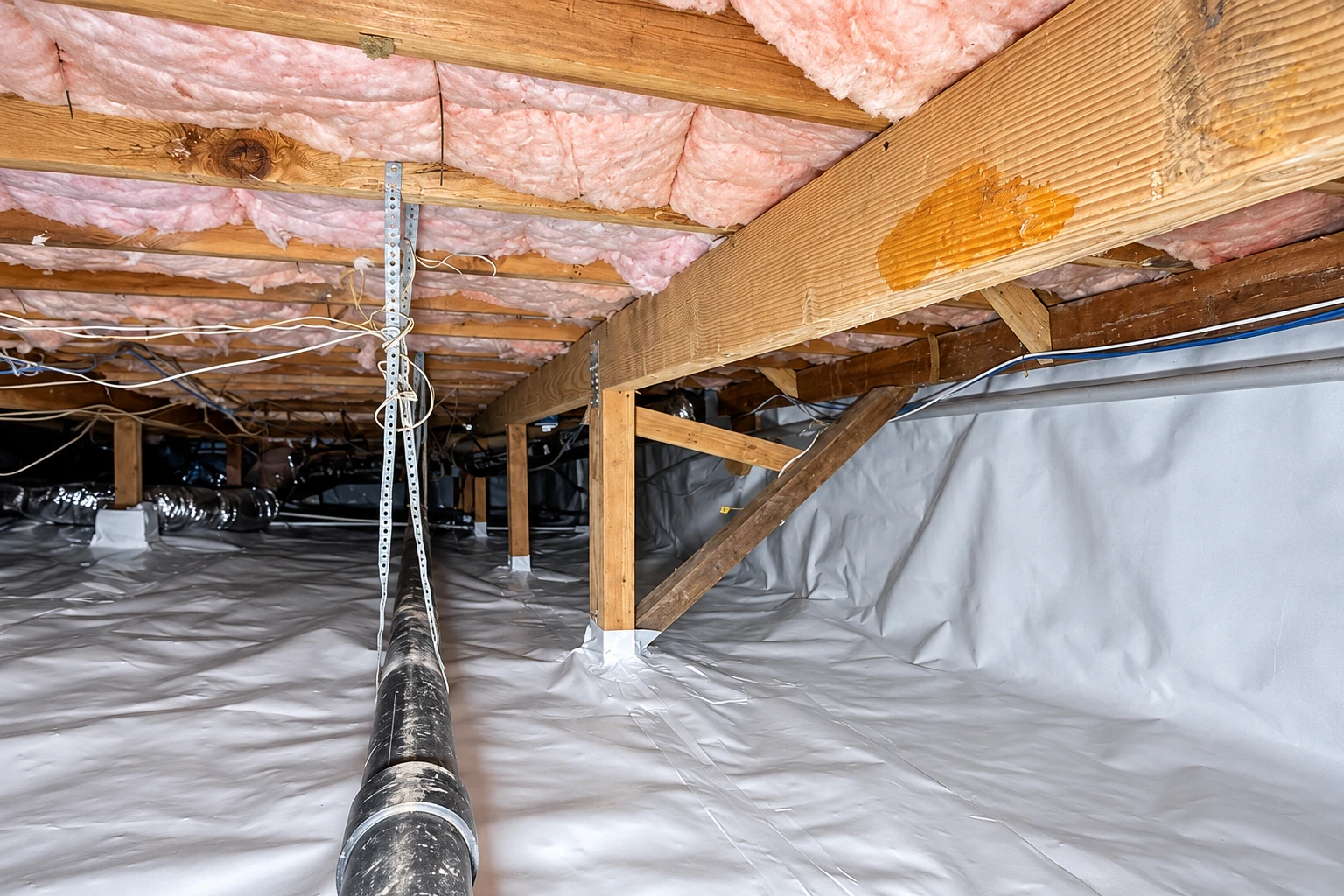
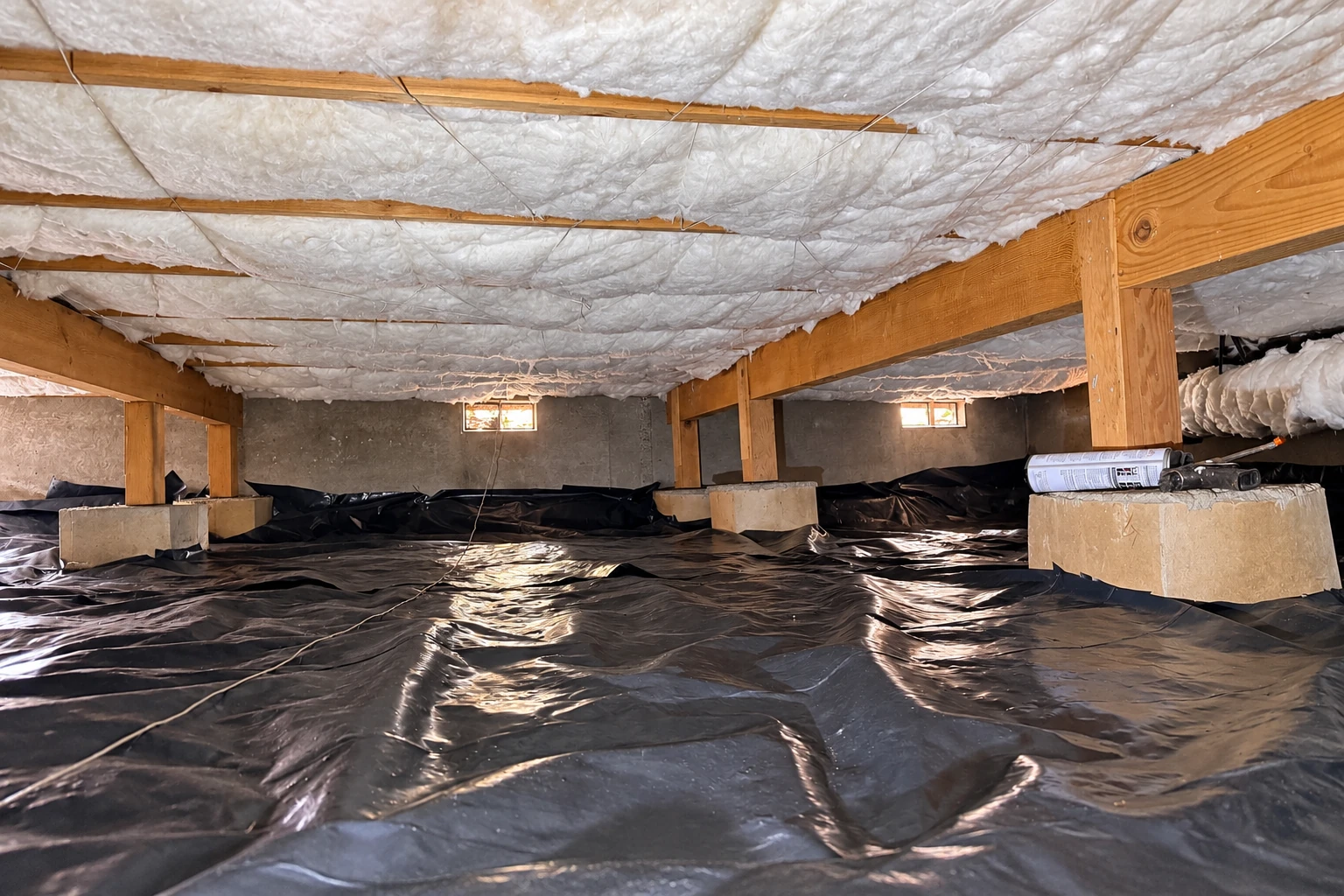
The bedroom over the garage runs hot in summer and cold in winter because it has outside air on more sides than any other room, often with thin insulation in the floor between it and the garage. We check that floor and the walls around it from the garage side and the attic side before we say what it needs. If your house sits over a crawl space and the floors feel cold, crawl space insulation usually helps, but only once the space is dry, because insulation over damp ground just holds the moisture. If it isn't worth doing, I'll tell you.